


Mallorca is one of the most eagerly anticipated and sought-after destinations for summer 2026; it has more to offer than many expect. Its cuisine is a compelling reason to visit the island, just as much as its coves, its light and everything the Mediterranean has to offer.
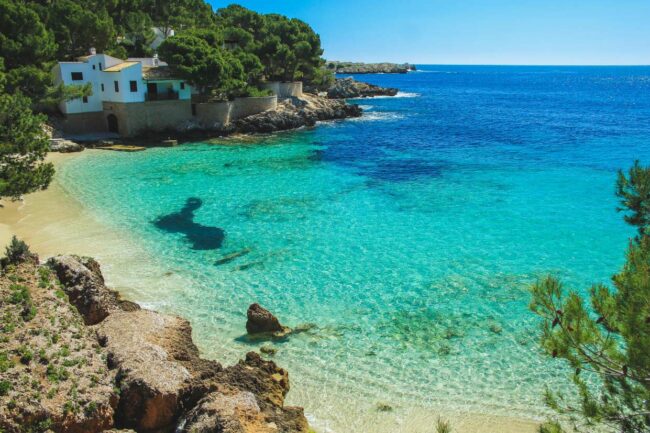
Some islands captivate you with what they show you, and others with what they offer. Mallorca is fortunate enough not to have to choose. Everyone knows its most photogenic side: coves with crystal-clear waters, sunsets over the Mediterranean, white villages steeped in centuries of history. But behind that image lies a cuisine with its own identity, built on a bountiful larder, shaped by the Mediterranean in the broadest sense and capable of surprising those who arrived expecting to eat well, but not quite this well. A terrace in Palma, a square in the interior, a restaurant with views in Cala d’Or or a table in S’Arenal with the sea in the background: in Mallorca, dining deserves to be planned with the same care as any other part of the trip. In 2026, with the island firmly established as one of the Mediterranean’s most sought-after destinations, its cuisine remains one of its strongest selling points and, paradoxically, one of the least explored by first-time visitors.
The dishes that define Mallorcan cuisine
The island’s cuisine is rooted in simplicity. Pa amb oli is its simplest and most representative expression: bread, oil and tomato transformed into a ritual, almost always accompanied by sobrassada, that paprika-cured sausage with such a unique character that it defies easy comparison. The ensaimada, known beyond the island though often reduced to its industrial version, is in Mallorca a bakery product with nuances that this copy fails to convey.
Mallorcan frito, tumbet, arroz brut and coca de trampó are dishes that speak of the island’s interior, its vegetable gardens and a tradition that needs no artifice. Porcella — Mallorcan-style roast suckling pig — is well worth seeking out beyond the more touristy menus. At the pinnacle of its seafood cuisine lies the lobster stew, a dish that combines the richness of the seabed with the patience of a preparation that brooks no shortcuts. And to round off the meal, almond gató encapsulates in a dessert what the island cultivates with the greatest pride: a local almond of recognised quality that appears, in one form or another, in almost every Mallorcan meal.
A cuisine open to the Mediterranean
Mallorca is not confined to its own traditions. For decades, the island has drawn influences from across the Mediterranean basin and assimilated them with ease. Good pasta, a pizza made with local produce, rice dishes echoing other shores of the same sea: everything coexists in its culinary offering without any dish detracting from the others. Eating in Mallorca can be an immersion in the very essence of the island or a journey through what the Mediterranean has left in its kitchens over the centuries. Often, it is both on the same day.
Food as part of the plan
Mallorcan cuisine is at its best when integrated into exploring the island. A hire car opens the door to inland villages where the local cuisine makes no concessions to mass tourism, where weekly markets offer fresh produce and where a meal in a square with no tourist signage can end up being the highlight of the trip.
Hiring a boat to spend the day at sea adds another layer to the experience. Dining on the high seas, with coves on the horizon and the water as the only sound, is something that in Mallorca is within reach of anyone who organises it in advance. And documenting it makes perfect sense: the island’s landscape, light and food create content that needs no production to work.
A larder with a name of its own
Mallorca’s agriculture supplies a large part of its cuisine. The vegetables in tumbet or coca de trampó are not mere garnishes: they are the centrepiece of the dish. Almonds, apricots, local olive oil and wines with their own designation of origin complete a larder that allows this cuisine to thrive on locally sourced produce without needing to import character from elsewhere.
You can sense this at the table. And you sense it especially when you venture off the beaten track and find the produce in its natural setting: a village market, an olive press, a winery in the interior, a terrace where what ends up on your plate comes from nearby.
More than it promises
Mallorca in 2026 remains a destination that exceeds the expectations of those who arrive expecting nothing but the beach. Its coves are worth every photo. Its light is exactly as they say. But its cuisine is the factor that transforms a getaway into something remembered for reasons that go beyond the visual.
Swimming in a cove, eating well, exploring the interior and ending the day with an ensaimada and an unobstructed view. That is Mallorca. And in 2026, it remains a plan that is hard to beat.